
Rojava: The Women’s Revolution That Refuses to Disappear.
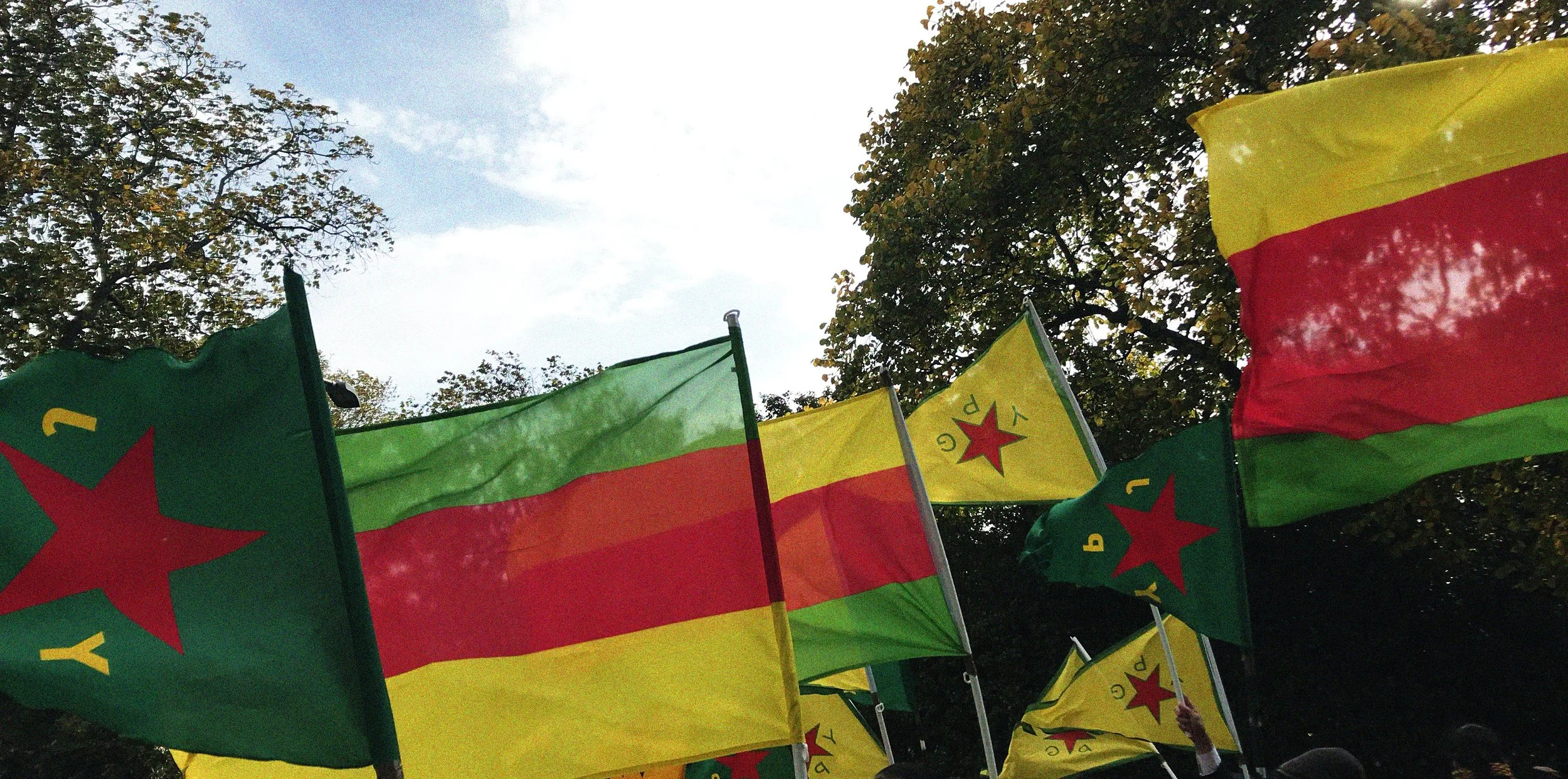
In 2014, the small Kurdish-majority town of Kobanê near the Syria-Turkey border became the focus of global attention. Surrounded by ISIS and expected to fall, Kobanê resisted, survived, and inspired one of the most radical democratic experiments of our time.
During the siege, I was translating Hemingway’s The Old Man at the Bridge and imagined the story set along the ancient Euphrates River, near some of the world’s oldest settlements. Hemingway’s Old Man fled the Spanish Civil War, leaving behind his animals, his home, and his life. Nearly eighty years later, in Kobanê, the Old Man was Kurdish. He left his goats, cats, pigeons, olive trees, and a home built over generations. The bridge in Spain became a river crossing in northern Syria; history had changed its language, but the fear and the loss remained the same.
When ISIS attacked Kobanê with American-made weapons taken after the Iraq invasion, the town acted as a symbol of the fight for life and freedom against death and slavery. This moment reminds us of other cities that were symbols of resistance under siege: Madrid during the Spanish Civil War, Stalingrad against the Nazis, Algiers in its anti-colonial struggle, Vietnam against the USA, Soweto’s uprising against apartheid, Palestinian resistance during genocides, and many more. In all these places, including Kobanê, people kept fighting even when defeat seemed certain, and resistance looked impossible.
For many in Europe, this was the first time they saw the Kurdish issue as more than a security problem or a story about violence. Rather, it became an image of resistance and hope: women with rifles standing up to the black flag of ISIS. These women defended their city against a force that represented jihadist extremism, patriarchy, and violence.
That moment brought Rojava and the Kurds to the world’s attention. It challenged the narrative long promoted by the Turkish state, which has often criminalised Kurdish freedom movements as ‘terrorism’ while hiding its own history of state violence, exploitation, repression, and assimilation. Now millions of people all over the world saw Kurdish freedom fighters, women and men, defending their lands, communities, dignity and freedom. But Rojava and Kurdish freedom movements did not begin with ISIS.
A Feminist Democracy
The former Syrian regime abandoned much of the north in 2012, at the start of the civil war, because of strategic military calculations. Local organised groups in North and East Syria, such as the Democratic Union Party (PYD), stepped in to fill the gap and began building a different way of life with their allies. But they did not create a nation-state. Instead, they rebuilt daily life from the ground up. Neighbourhoods formed communes, councils led to district assemblies, and responsibilities were shared at every level. Every leadership role was held by both a woman and a man. From the start, Kurds, Arabs, Syriacs, Armenians, and others were included and had the right to organise themselves autonomously within broader society.
This new way of organising came from both necessity and political ideas. It rejected centralised power, patriarchal laws, ethnic hierarchies and narrow nationalism. Instead, it aimed for decentralisation, grassroots democracy, women’s liberation, an ecological society, and peaceful coexistence among communities. The main idea was simple: everyone should have a place to live with dignity. The most important shift was social.
The Women’s Defence Units (YPJ) became known worldwide during the fight against ISIS, but the deeper change happened outside the battlefield. Shared leadership became the norm, and women’s councils gained the authority to block decisions affecting women’s rights. Meanwhile, new laws addressed forced marriage, child marriage, and honour killings, while education programs challenged patriarchy as a structural system rather than viewing it as a custom. In many liberal democracies, gender equality remains partial and symbolic. In Rojava, it became part of governance, even under wartime siege conditions. For the first time in the modern Middle East, gender equality was embedded at the centre of the political structure. This is why the conflict is about more than land. Rojava challenges deep-rooted tribal, state, patriarchal, capitalist, and colonial hierarchies through lived theory and practice.
Geopolitical constraints and uncertain futures
Every revolution that endures through war is marked by contradictions, some rooted in historical context and survival imperatives. Rojava’s dependence on external military support, particularly from the United States during the campaign against ISIS created a dilemma. While these alliances helped Rojava survive, they also introduced dependence as well as external pressure. Inside Rojava, the region's diverse population and the pace of social transformation also created tensions over representation and power-sharing.
In addition to internal challenges, Rojava also faces persistent pressure from both Ankara and Damascus. The Turkish state has consistently opposed any autonomous Kurdish political structure along its borders. Similarly, the Syrian state, despite changes in territorial control and the presence of armed radical Islamist factions such as Hay'at Tahrir al-Sham (HTS) in parts of the country, has also refused to recognise lasting Kurdish autonomy. The denial of Kurdish political identity has long enabled the denial of Kurdish rights. Both Ankara and Damascus view Kurdish self-rule not as a neighbouring democratic experiment, but as a threat. A decentralised system led by women and marginalised communities stands in contrast to the authoritarian nationalism and centralised power structures of their systems. Military operations, drone strikes, shelling of Kurdish cities, and attacks on water stations, electric grids, and grain facilities have all become tools to contain and destroy the revolution.
Given these pressures, the question is: what can truly be erased, and what will remain? While territory may change hands, and agreements can limit autonomy, the lived experience of millions leaves traces. An entire generation has grown up in communes. Women have led councils and shaped decisions. Kurdish and Syriac, once banned, are spoken openly alongside Arabic and Turkish. Democratic decision-making has been practised. The old man by the Euphrates may not speak about geopolitics like someone in London, but he has seen his granddaughter walk into a council meeting without asking permission. Sometimes revolutions endure not as states, but as habits and cultures that reshape people's lives.
The Revolution that Refuses to Disappear
Rojava is not a utopia; it exists in a world of conflict and rising authoritarianism, facing real pressures. It has made tactical alliances to survive. Yet the revolution did something rare: it institutionalised women’s liberation and grassroots democracy during wartime, shifting power from centralised states to local communities. The co-chair model challenges patriarchy in daily practice. Neighbourhood assemblies create democratic participation. Women’s independent councils ensure equality is enforced within social structures. These are not simple slogans, but mechanisms to reorganise power from the top to the bottom.
Today, Rojava faces renewed threats: military offensives, drone attacks, displacement, embargoes, and isolation. Yet, the social transformation cannot simply be reversed. Women who have led will not return to silence and slavery conditions quietly. Communities that have governed themselves will not forget how to do so. The old man by the river may still miss his goats, but history has already changed around him. Revolutions that change how people understand power and dignity do not disappear. They outlast states, governments, borders, and sieges.
Shoresh is a translator, editor, and researcher born in Kurdistanbul and now based in the UK, working and organising at the intersection of language, literature, labour, politics, and liberation movements.
Each issue we print 40,000 copies, worth £120,000 to our vendors. Your £3/month subscription is used to print 30 copies per issue, worth £90 for our vendors. We went from 1000 copies per issue in 2018 to 40,000 per issue in 2026. The only thing stopping us from doing more is money. With your support, we can go even further. Help us print and distribute more copies for free to anyone who wants to sell it by becoming a monthly subscriber.